
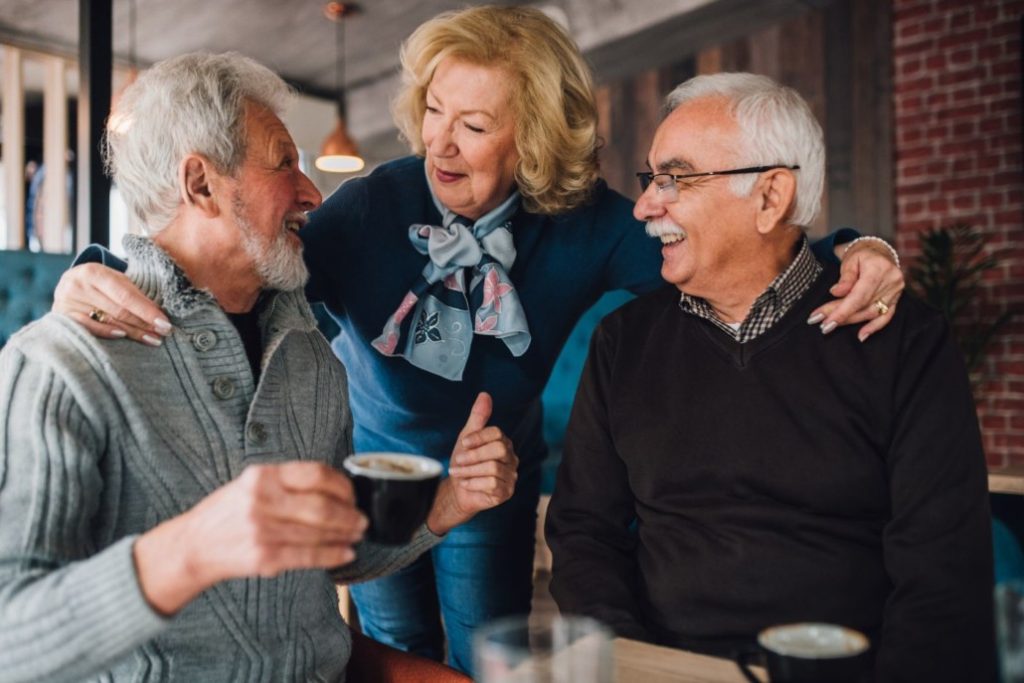
What if the most expansive, self-aware, joy-filled chapter of our lives is not behind us, but just beginning? Julia, who at 67 learned to paint for the first time, now shares her vibrant artwork with her grandchildren and neighbors. David, a retired engineer, mentors young entrepreneurs and helps them develop innovative ideas and bring their visions to life. These are not rare exceptions—they are possibilities open to all of us. The Third Third is an invitation to claim transformation and fulfillment, no matter where we start.
What if the season we feared is the one that frees us?
For many of us entering late adulthood, there is a subtle realization: our current scripts may no longer fit. That moment often arrives with anxieties: fears of becoming irrelevant, worries about identity, uncertainty about purpose, or grief over changing roles. These concerns are valid and shared by many. But that awareness is not a crisis; it is an invitation.
This next phase is more than a stage. It is a perspective shift. In the 1980s, British historian Peter Laslett introduced the “Third Age”—a stage between work and dependency marked by opportunity (Laslett, 1989). Today, as lifespans continue to rise—according to the World Health Organization, global average life expectancy has increased by more than six years since 2000—and the concepts Laslett outlined are more relevant than ever. Now called the Third Act or Third Third, this period reframes aging as dynamic and expansive, rooted in both historical research and modern realities (Gilleard & Higgs, 2005).
The Third Third divides life into learning, building, and integrating. Here, experience meets freedom, wisdom meets courage, and proving gives way to being ourselves.
The Third Third’s overarching theme: living longer—and living better—is about deepening our years, not just extending them—evolving with clarity, not just surviving (Baltes & Baltes, 1990).
What the Third Third Really Means
The Third Third is not about slowing down; it is about waking up. Think of the moments that have shaped you: the quiet pride of watching your child step onto a graduation stage or the emotions of packing up your office after 25 years, unsure of what would come next. These textured memories—the wins, losses, pivots, heartbreaks, accomplishments, and lessons—are yours to use consciously to create your own plan and to stop answering every expectation or chasing others’ approval.
Many of us achieve extraordinary things in the first two-thirds of life: building careers, raising families, launching ventures, supporting others, enduring setbacks, reaching milestones. Yet in the Third Third, realizations deepen. Epiphanies clarify. We see our strengths, blind spots, and our inner saboteurs. Because we finally know ourselves, growth becomes more honest and more aligned. The Third Third is about filling our lives—not with busyness, but with meaning.
Why the Third Third Mindset Fuels Growth and Happiness
A Third Third mindset is expansive: it lets us change direction, stop shrinking in fear, reject insecurity, and reclaim control from our inner saboteur.
Growth now looks different. It is about alignment, not accumulation—clarifying, not climbing. With a Third Third perspective, our questions change: What do I want? What energizes me? Who am I when not performing for others?
That shift transforms happiness. It depends less on applause and more on authenticity. Expansion feels grounded, not frantic. Gratitude deepens for what we have done and what remains possible. Research shows that as people age, they increasingly prioritize emotionally meaningful goals and relationships (Carstensen et al., 1999), often leading to greater well-being and life satisfaction (Carstensen, 2009).
The Third Third is more than a life stage; it is a mindset movement. Across the globe, a growing community is already embracing this perspective, joining groups, communities, and new networks that celebrate active, meaningful aging. It challenges old stories of aging and replaces them with growth, contribution, and conscious longevity.
Living Longer Is a Strategy, not a Wish
In the Third Third, longevity is not accidental. It’s intentional and part of the plan. We want more time—not just to exist, but to experience travel, mentor, love, repair relationships, learn, or reinvent ourselves. More time to live our truest selves. And the empowering truth is that much of how we age is influenced by how we live (Rowe & Kahn, 1997; Olshansky et al., 2009).
Start by protecting your mindset. Chronic fear, resentment, and self-criticism erode vitality. Notice your inner saboteur, name it, challenge it. Swap “I’m too old” for “I’m just getting started.” Swap “It’s too late” for “Why not now?” Make space for growth and self-empowerment.
Move your body with gratefulness, not punishment. Movement is respect for the life you wish to extend. Walking, stretching, strength training, dancing, and playful activities invest in independence and vibrancy.
Curiosity becomes your best friend and partner. Learning, exploring, reading, or starting creative projects keeps your brain agile and spirit youthful.
Strong relationships predict a long life. Nurture friendships, deepen partnerships, repair what you can, and build community to strengthen both heart and longevity.
However, self-awareness may be the Third Third’s greatest asset. Observe patterns, forgive yourself, adjust behaviors, and choose differently to lower stress and boost stability. Most importantly, stop giving in to fear. In the Third Third, fear does not vanish. You simply stop obeying it. Start the project. Have the conversation. Take the trip. Pivot if needed. Courage, more than comfort, sustains a full life.
Filling the Third Third to the Brim
The Third Third is not a waiting room; it is a launching pad. Examine health, finances, relationships—then ask, “Given this, what’s possible?”
From there, create experiences that energize you. Choose meaning over motion. Build intentional, not reactive, days. Most importantly, allow yourself to be fully you—not the version that kept others comfortable, met expectations, or grew from insecurity, but the one that feels aligned, grounded, grateful, and free.
The Gift of Reaching the Third Third
Reaching this stage of life is where real power lies. We are no longer auditioning—we are authoring the life we desire.
Living longer in the Third Third is not about simply adding years; it is about increasing depth through clarity, courage, curiosity, and gratitude. We have gathered wisdom, endured hardship, and proven our resilience. Now we can expand intentionally through self-awareness and reinvention.
So, tomorrow morning, let yourself act on that courage: pick up the phone to call someone you miss, register for a class you have always been curious about, or put your walking shoes by the door for that first step into something new. Let this be the scene where you begin to author your Third Third boldly and without apology.
Longevity is more than merely a theme for the Third Third. It is the goal.
Pat Landaker is a Certified Senior Advisor® and a freelance writer specializing in senior-focused, positive and successful aging topics.